
Erasmus+ · 7 countries · 6 languages
Green business, learned in conversation.
An online course, real business cases and Gaia, an AI tutor that asks before it answers. Built by 10 partners from 7 countries, in 6 languages.
Three ways into green entrepreneurship
From a first idea to action within your own sphere of influence.
Online course
What green entrepreneurship means and how it relates to many sectors and job types. Text, videos and quizzes.
Conversational tutor
Discuss real-world cases and your own plans for green action with Gaia.
Community
Meet learners with matching interests online and at face-to-face events across Europe.

Project facts
- Status
- Ongoing
- Duration
- 1 April 2024 – 31 March 2027
- EU grant
- €1,499,148
- Programme
- Erasmus+
- Key action
- Partnerships for cooperation and exchanges of practices
- Action type
- Alliances for Education and Enterprises
- Countries covered
- 7
- Project number
- 101139849
Project deliverables
In line with the open-access principles of Erasmus+, all public deliverables are free to download.
All resources- D1.2.1WP1
 Ethics Requirements DocumentThe project's ethics framework for running L2BGreen research responsibly: how participant data is handled under the GDPR, which ethical principles guide the work, and how consent, privacy and AI bias are addressed.Download PDF
 - D2.1WP2
 Interactive Online Course Instructional DesignHow the L2BGreen course teaches: short business cases worked through with Gaia, an AI tutor that asks questions and gives feedback instead of answers. Explains the learning principles behind it and shows the first prototype.Download PDF
 - D2.2WP2Evaluation ToolkitA set of surveys for measuring what learners gain from L2BGreen: knowledge, usability of the platform and chatbot, and attitude change, designed to be combined with data logged during learning.Download PDF
- D3.1WP3Learning MaterialsThe L2BGreen case library for teaching green entrepreneurship. Each case combines two topics from a competence framework of eight teaching areas, with comprehension, knowledge, application and argumentation questions, many with exemplary answers.Download PDF
- D4.1WP4
 Conversational Agent DesignThe technical blueprint of the L2BGreen platform: how the AI tutor Gaia is built from cooperating agents, how educators create case activities and follow learner analytics, and how everything connects to Moodle via LTI 1.3.Download PDF
 - D4.3WP4Multilingualism SupportHow L2BGreen works in six languages: course materials, interface and AI prompts are professionally translated, while live chats with Gaia are machine translated through English. Includes quality checks, translation feedback and risk handling.Download PDF
- D5.1WP5
 Stakeholder Engagement PlanThe plan for bringing L2BGreen to real learners: students, apprentices, professionals and entrepreneurs. It sets target numbers, explains how partners plan and document engagement in two rounds, and describes each partner's reach.Download PDF
7 public deliverables
10 partners, 7 countries
Universities, vocational training providers, associations and a start-up. Coordinated by the University of Twente.
Five universities bring research in learning technology, entrepreneurship and sustainability. A vocational training institute, three associations and an AI start-up bring practice, learners and technology. Together they cover seven countries and six languages.
Meet the partners

We meet where the work happens
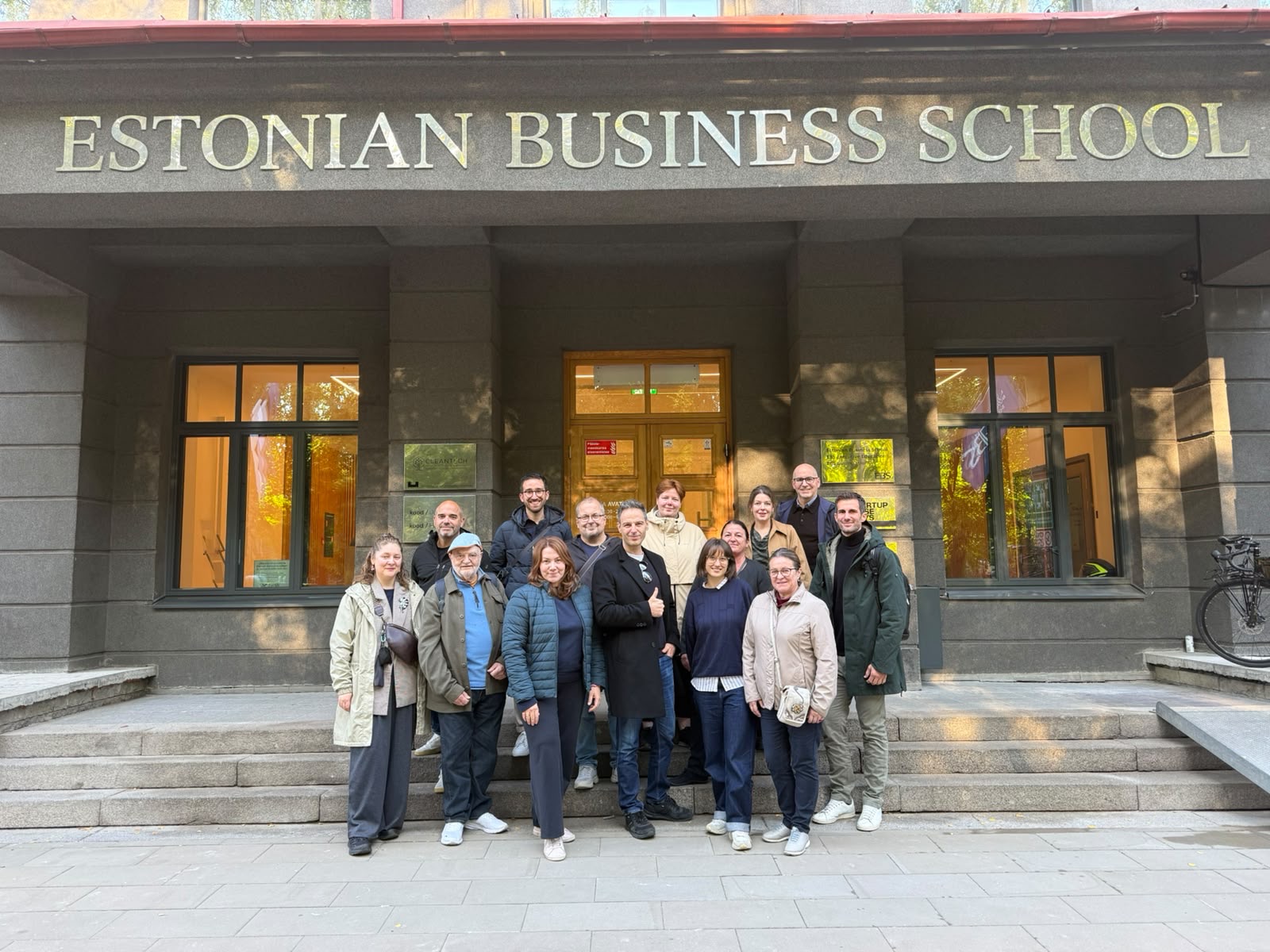
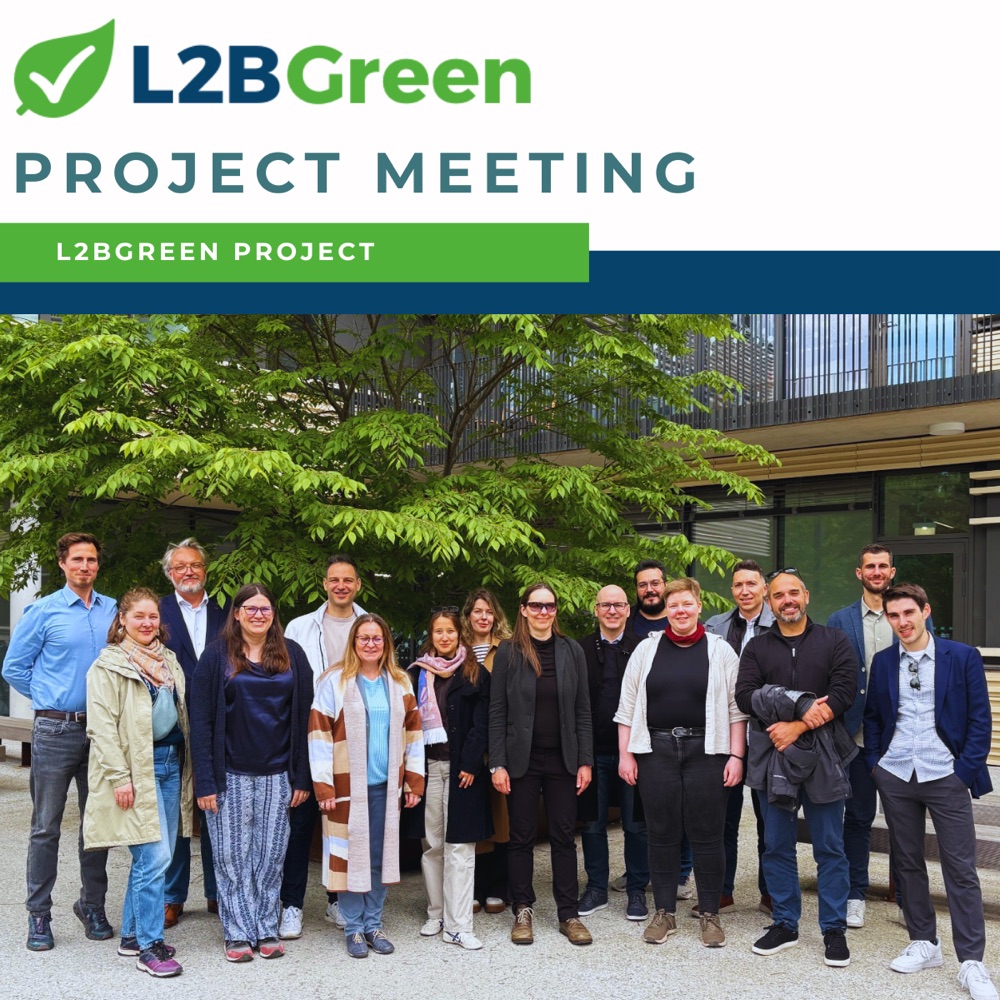
The consortium meets in partner cities, so far in Ljubljana, Graz, Bern and Tallinn. Between meetings, the work runs across seven countries.
Partners and contacts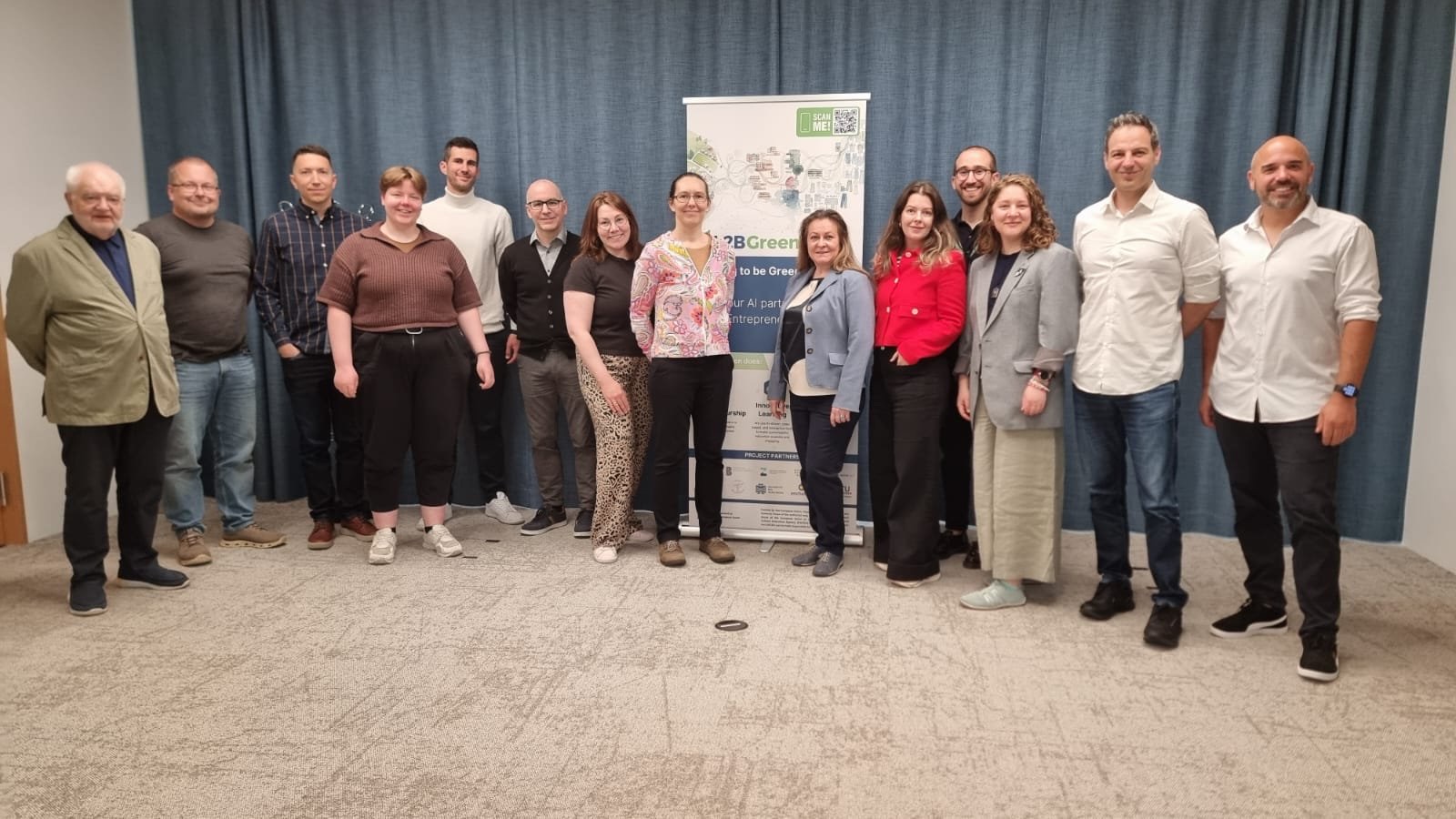
Join the L2BGreen community
200+members in the L2BGreen community
Learners, educators, researchers and entrepreneurs from across Europe follow L2BGreen on LinkedIn for news, newsletters and invitations to events and competitions.
Follow L2BGreen L2BGreenL2BGreen Is Now OpenThe L2BGreen learning experience is now available online: realistic business cases, the learning catalogue and Gaia, our conversational AI learning agent.Read on LinkedIn
- L2BGreenL2BGreen featured by Estonian Business SchoolLearning to be green means learning how to turn sustainability into action. Estonian Business School highlights how L2BGreen combines sustainability education, entrepreneurship and AI.Read on LinkedIn