
Medien
Presse
Pressemitteilungen, Pressemappe und Kontakt für Journalist:innen.
Berichten Sie über L2BGreen
Wir laden Journalist:innen, Redaktionen, Partner und Multiplikator:innen herzlich ein, über L2BGreen zu berichten und die Neuigkeit in ihren Netzwerken zu teilen. Pressemitteilung und Pressemappe dürfen für die Berichterstattung über L2BGreen frei verwendet werden, bitte mit der Quellenangabe „L2BGreen“. Gerne vermitteln wir Interviews mit der Projektkoordination und den Partnern.
Pressekontakt: Dr. Stefan Bauer · stefan.bauer@digitale-zukunftsbildung.eu
Pressemitteilung ·
L2BGreen Opens Its Green Entrepreneurship Learning Platform to the Public
Diese Pressemitteilung liegt nur auf Englisch vor.
The European Erasmus+ project L2BGreen (Learning to Be Green) has reached an important milestone: the project’s public learning platform is now available to anyone interested in green entrepreneurship, sustainability and the skills needed for Europe’s green transition.
Sustainability decisions in business are rarely simple. Economic goals often need to be balanced with environmental responsibility, social impact, stakeholder expectations and long-term consequences. L2BGreen addresses this challenge by bringing realistic sustainability and entrepreneurship decisions directly into the learning process.
A central part of the L2BGreen learning experience is Gaia, the project’s conversational AI learning assistant. Gaia accompanies learners while they work through concrete sustainability and entrepreneurship cases. Instead of simply providing answers, Gaia asks questions, responds to learners’ reasoning and provides feedback that encourages them to consider different stakeholders, examine trade-offs and develop well-reasoned responses to complex situations.
The learning approach and the role of Gaia are also presented in a recent article on EPALE, the European platform for adult learning. The article introduces L2BGreen as an AI-enhanced learning experience that combines realistic business cases with sustainability and green entrepreneurship.
The public L2BGreen Learning Platform provides access to a catalogue of practical business cases covering topics such as sustainable business models, the green economy, innovation, sustainable marketing, greenwashing, financial decision-making and responsible leadership.
Learners can select the cases that are most relevant to their interests, studies or professional work and explore them at their own pace. The platform combines these cases with interactive learning materials and quizzes, creating a flexible environment that can be used both independently and in structured educational settings.
“L2BGreen is an important step towards making green entrepreneurship education more open, practical and inclusive across Europe,” says Pantelis M. Papadopoulos, Project Coordinator of L2BGreen and Associate Professor at the University of Twente. “With the public version of the platform, we want to give learners, educators, entrepreneurs and professionals a space where they can explore sustainability not only as a concept, but as something they can apply in their studies, their work and their everyday decisions.”
The platform is designed for a broad range of users. Educators and trainers can integrate individual cases into courses and workshops, while university and vocational education students, adult learners, entrepreneurs and professionals can explore the learning materials independently. No previous knowledge of L2BGreen or green entrepreneurship is required to get started.
Another important element of the project is its European and multilingual approach. The learning materials and Gaia are planned to be available in several languages, including Dutch, English, Estonian, German, Greek and Slovenian. This makes the learning environment suitable for vocational education, higher education, entrepreneurship training, professional development and lifelong learning in different European contexts.
To help new users get started, L2BGreen also provides a practical video introduction explaining how to use the Learning Management System and work with Gaia. Further information, including the EPALE feature, the Learning Catalogue and additional project resources, is available through the links below.
About the L2BGreen Consortium
The L2BGreen consortium brings together universities, universities of applied sciences, vocational education providers, technology partners, entrepreneurship organisations and sustainability experts from across Europe.
The project partners are:
- University of Twente / Universiteit Twente, Netherlands, Project Coordinator
- Bern University of Applied Sciences / Berner Fachhochschule, Switzerland
- Saarland University / Universität des Saarlandes, Germany
- Graz University of Technology / Technische Universität Graz, Austria
- enchatted, Greece
- ZDOPS / Združenje Delodajalcev Obrti in Podjetnikov Slovenije GIZ, Slovenia
- Estonian Cleantech Association / Eesti Rohetehnoloogia Liit MTÜ, Estonia
- Verein zur Entwicklung der digitalen Zukunftsbildung, Austria
- IEK DELTA / Scholes Delta Voreiou Ellados Anonymi Etaireia, Greece
- Estonian Business School / Sihtasutus Estonian Business School, Estonia
L2BGreen is funded by the European Union through the Erasmus+ programme and runs from 1 April 2024 to 31 March 2027. The project supports Europe’s green and digital transition by making green entrepreneurship education more accessible, interactive and closely connected to real-world challenges.
Links und weitere Informationen
- L2BGreen-Lernkatalog
- L2BGreen-Lernplattform
- EPALE-Artikel: „L2BGreen: Learning Sustainability Through AI“
- Webinar: Gaia und die Lernplattform nutzen
- L2BGreen auf LinkedIn
Finanziert von der Europäischen Union. Die geäußerten Ansichten und Meinungen entsprechen jedoch ausschließlich denen des Autors bzw. der Autoren und spiegeln nicht zwingend die der Europäischen Union oder der Europäischen Exekutivagentur für Bildung und Kultur (EACEA) wider. Weder die Europäische Union noch die EACEA können dafür verantwortlich gemacht werden.
Pressemappe
Logos und Fotos für Ihren Beitrag. Bitte mit Quellenangabe: L2BGreen.
 L2BGreen-Logo (PNG)Herunterladen
 L2BGreen-Bildmarke (SVG)Herunterladen
 Kofinanziert von der Europäischen Union (PNG)Herunterladen
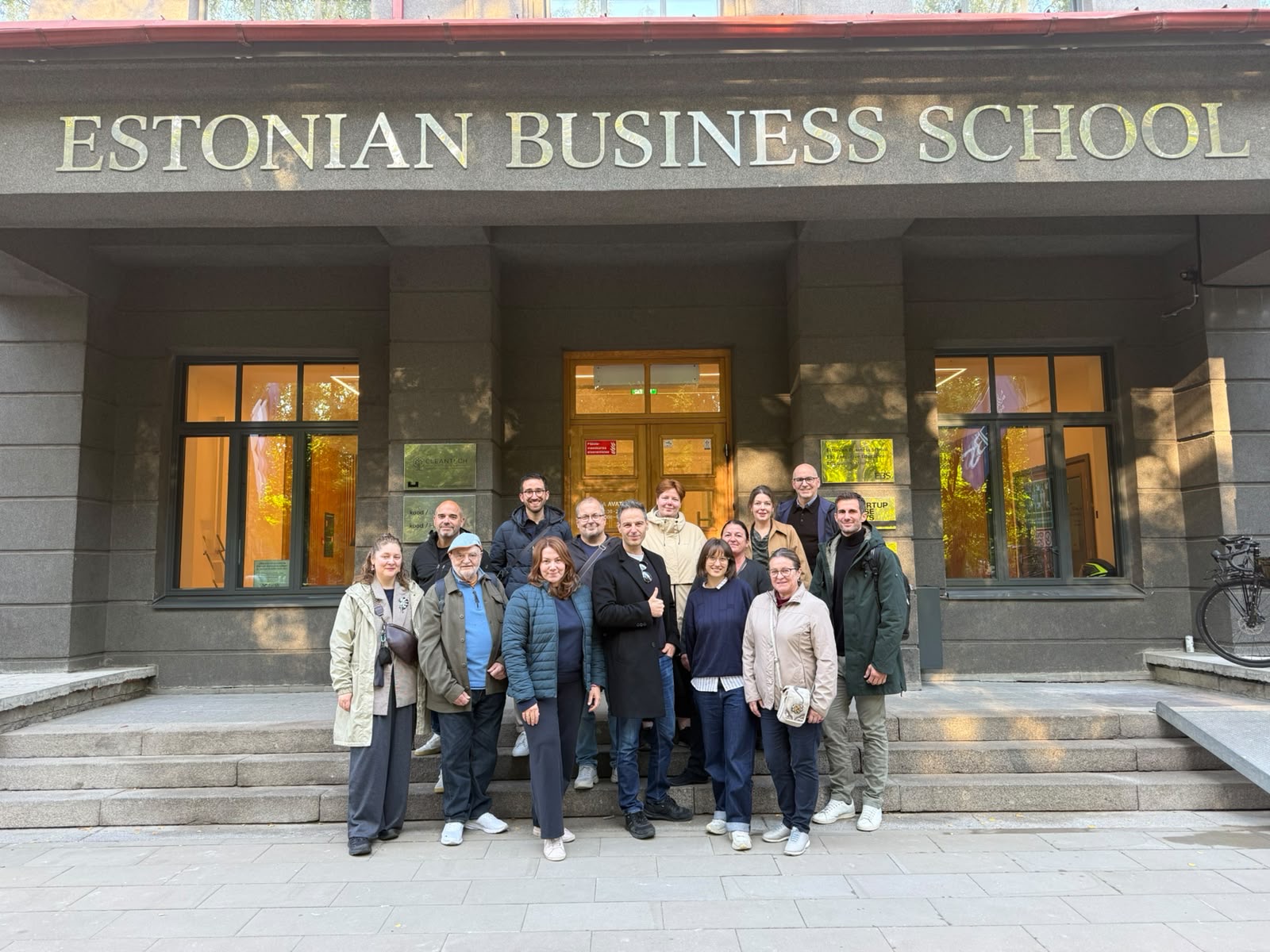 Konsortialtreffen, Tallinn, Oktober 2026Herunterladen
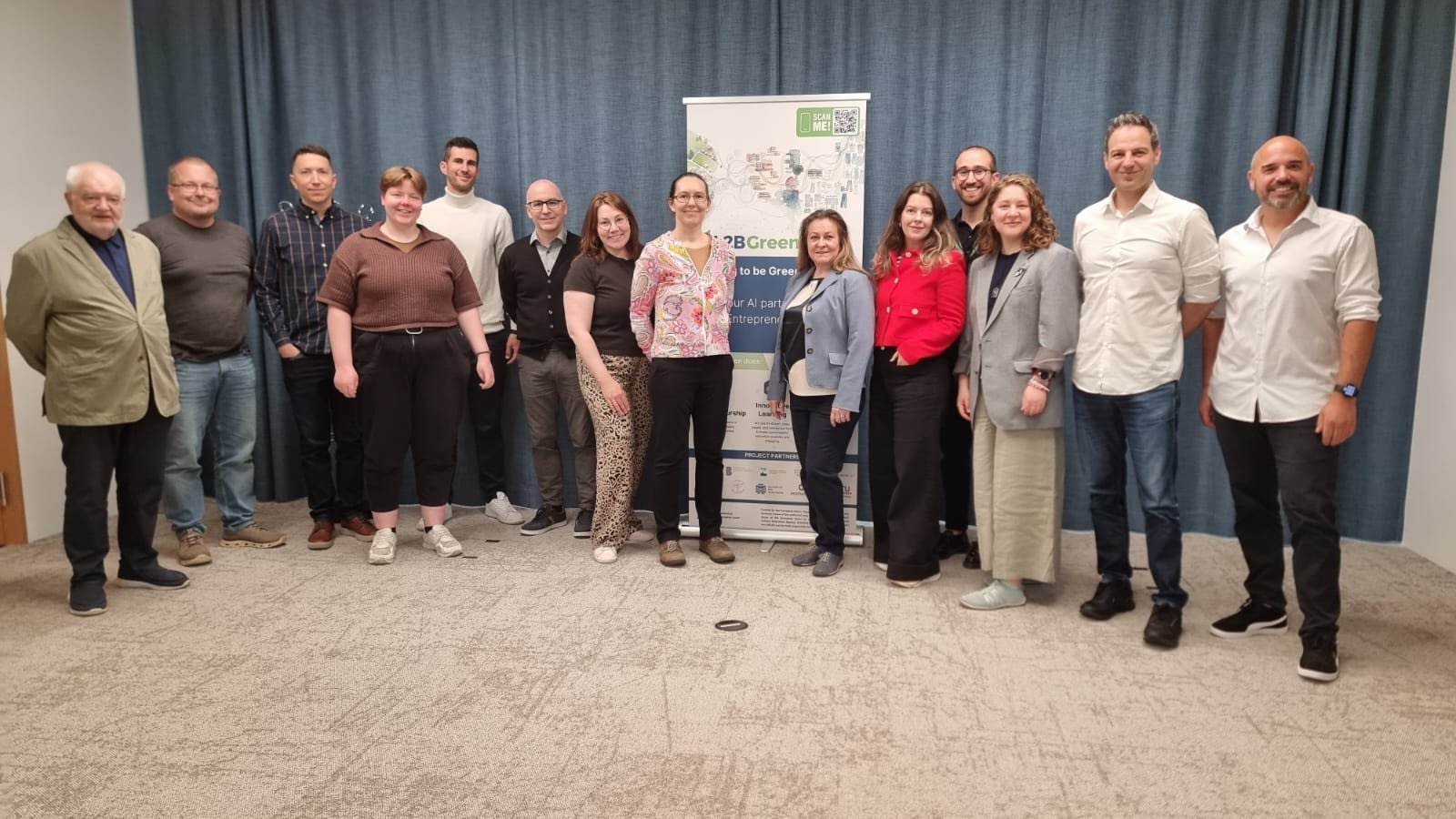 Konsortialtreffen, Bern, Mai 2026Herunterladen
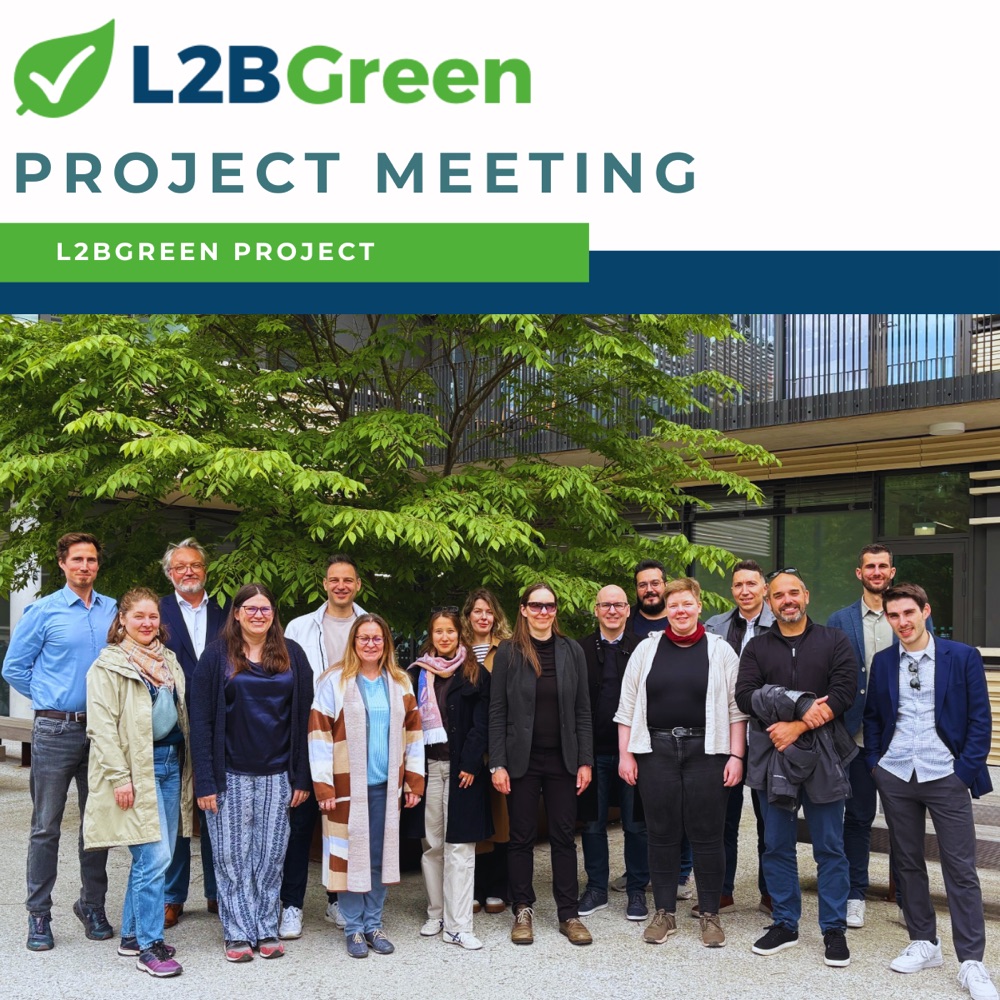 Konsortialtreffen, Graz, Mai 2025Herunterladen
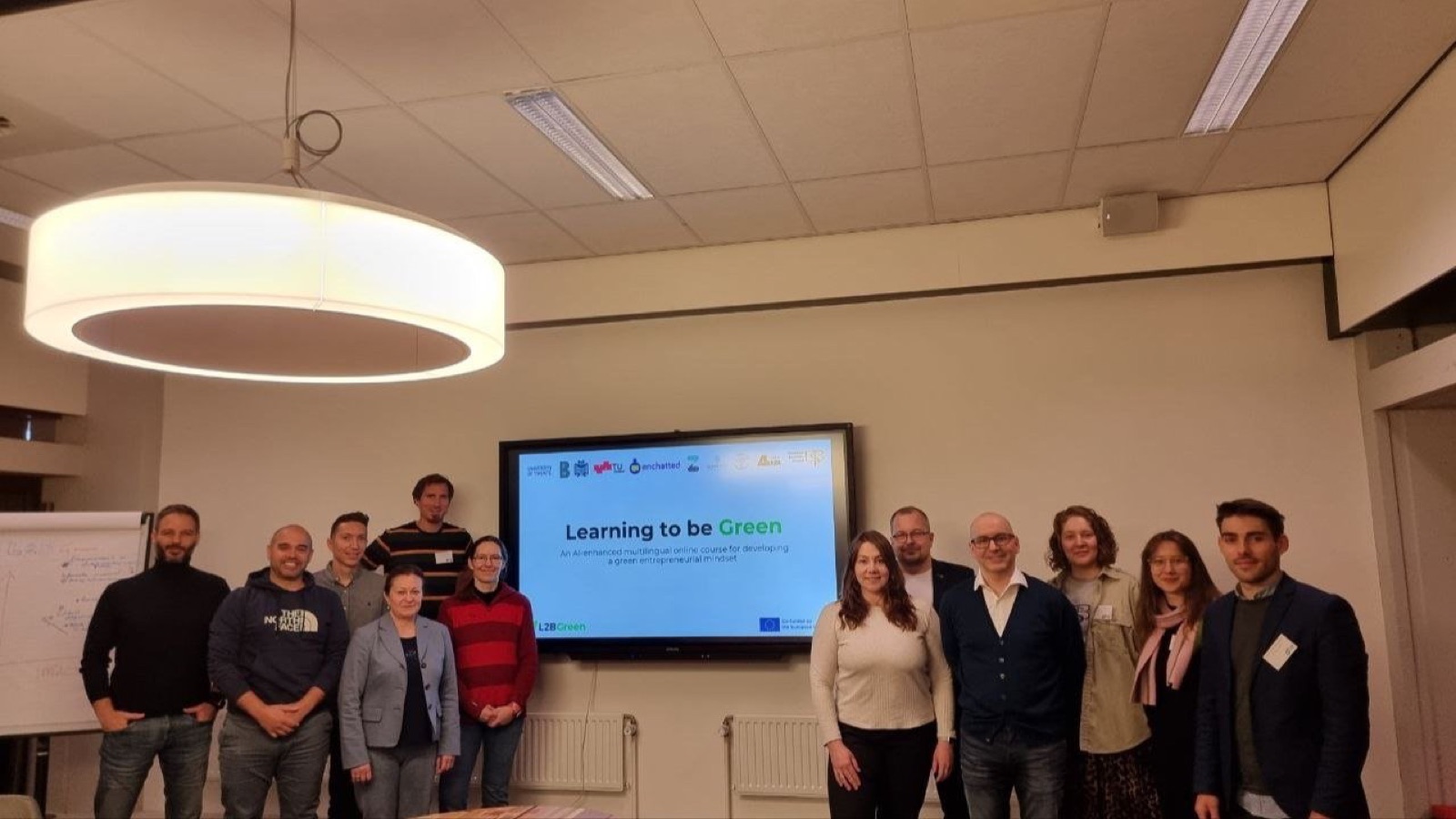 Kick-off-Treffen, April 2024Herunterladen